
TLDR
- Rumah Degil, a traditional Malay house built in 1926, has witnessed significant historical events including the Japanese Occupation and the 1969 riots in Kuala Lumpur.
- Despite various parties attempting to buy the house for development, the family of the original owners rejected the offers and continued to defend the home as part of their family heritage.
- Rumah Degil was successfully preserved and relocated to a new site at the National Art Gallery in Kuala Lumpur, with more than 70% of its original materials reused in its reconstruction in 2019.
If you’ve ever watched the Pixar animated film Up, you’ll remember the story of an elderly man who refused to leave his home despite development rising around him. While Malaysia’s version doesn’t involve hundreds of balloons lifting a house into the sky, it tells a similarly compelling tale – one of a stubborn little home that chose to stand its ground amid rapid change.
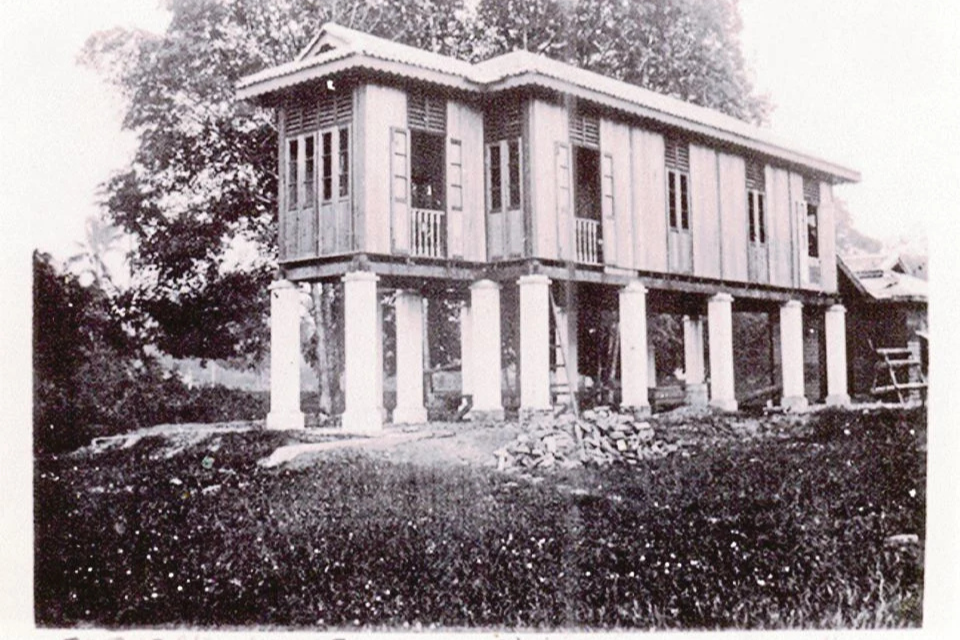 Image Credit: Berita Harian
Rumah Degil – directly translated as “Stubborn House” – dates back to 1926. The traditional Malay house was constructed by Haji Jaafar Sutan Sinombar, also known as Sutan Mengatas, who happened to be the nephew of Sutan Puasa.
Based on a 2018 book titled Sutan Puasa: Founder of Kuala Lumpur by Abdur-Razzaq Lubis, Sutan Puasa was described as the earlier founder of Kuala Lumpur.
The house witnessed the Japanese Occupation and the 1969 riot
Rumah Degil had sheltered at least five generations. The house’s sixth-generation descendant, Nora Salleh, shared the story of her mother, Normah Majawali, who was known to many as the heir who rejected development. But according to her, the story is more complicated than that.
Nora said her mother, affectionately known as Nenek Normah, chose to live in the house located in Chow Kit to accompany a sister who never married.
Although Nenek Normah grew up in the house, she eventually moved out after she got married. However, after her husband passed away in 1972, she decided to return to her childhood home. At that time, her mother, Sariah Jaafar, and her older sister, Batiah, were also living in the house.
 Image Credit: FMT
When Sariah passed away in the 1990s, Nenek Normah chose to stay to accompany Batiah. According to Nora, although Rumah Degil was inherited by her mother as well, she allowed her sister to make all the decisions.
“There was no denying that various parties came to persuade my mother and aunt to sell the house for development. But Aunt Batiah decided to hold firm and not sell the house, as it was their late father’s wish that the sisters did not sell the home, regardless of what happened,” Nora said in an interview with Harian Metro.
Batiah passed away in 2006. Despite that, Nenek Normah insisted on continuing to live in her childhood home. It wasn’t until 2009 that she voluntarily moved to Putrajaya to live with Nora. Eventually, Nenek Normah decided it was time to let the house go.
Rescuing Rumah Degil
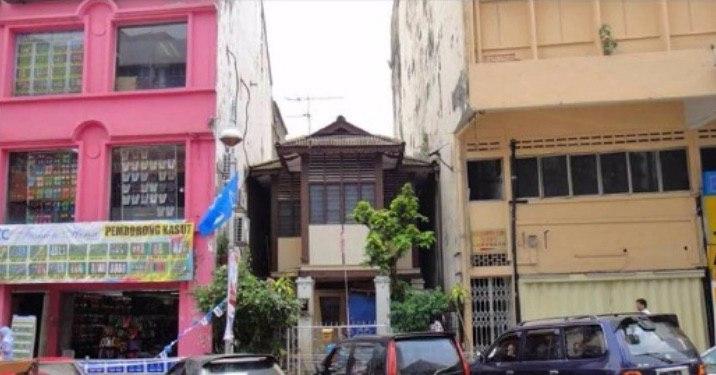 Image Credit: Malaysia Post
Growing up in Jalan Chow Kit, it was hard for architect Tan Kay Chay not to notice the old house squeezed between two buildings. Out of curiosity, Tan and his cousin, James Chong, decided to dig into the history of Rumah Degil, which led them to Fatulrahman Ghazali, a creative director and videographer at Obscura Films who had made a documentary about the house in 2007.
After confirming the house’s link to Sutan Puasa, Tan felt it would be a shame for it to be demolished. So in 2014, he initiated a project called Rumah Pusaka Chow Kit (RPCK) to save Rumah Degil from disappearing forever.
While their work was meaningful, it certainly didn’t come without challenges.
Tan dreamed of reconstructing the house on Bukit Nanas, where Sutan Puasa once lived. The area was also the site of a Mandailing settlement before the Klang War from 1867 to 1873.
 Image Credit: The Hasanah Report
While waiting for the perfect site for the project, a crew carefully dismantled the house, one wooden board at a time. Using his own money, Tan rented a house in a hidden location to store the dismantled parts so they wouldn’t be stolen.
“More than a year after the dismantling, a few people expressed interest in buying the house for personal use, but it wouldn’t be in KL. We also had people who wanted to rebuild it in the forests of Janda Baik, as well as in Ipoh or Penang. But an inner voice told us it wouldn’t be right – Rumah Degil should stay in KL where it belongs,” Tan said in an interview with NST.
Despite the project’s online exposure, the group later faced challenges as they struggled to decide on the direction of the project.
According to Tan, by early 2017, they almost gave up. James then put out an appeal on Facebook, saying that alternatively, they would sell the house to anyone who needed spare parts.
The post gained renewed attention. Soon after, things began looking up when they received a call from the National Heritage Department.
After some negotiations, Rumah Degil finally found a place to call home.
Right in the heart of KL
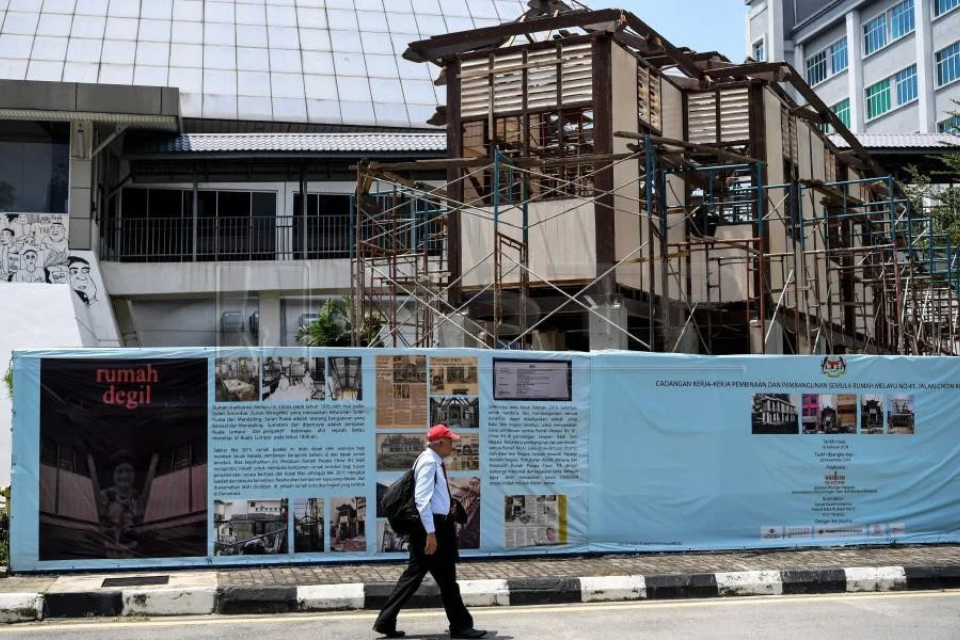 Image Credit: NST
In February 2018, the reassembly of Rumah Degil began on the grounds of the National Art Gallery, right in the heart of Kuala Lumpur.
Reportedly, the rebuilding process also came with its own set of challenges. Still, living up to its stubborn nature, the house was successfully reconstructed in 2019.
Haniff Ayub, Assistant Curator of the Corporate Communications Unit of the National Art Gallery at the time, said that roughly 70% of the house was rebuilt using its original materials, while the rest had to be replaced due to rot and other issues.
 Image Credit: FMT
So, how did Nenek Normah react to this incredible effort to save her ancestral home? According to FMT, she was both happy and sad after learning that the house had been moved and rebuilt at a new location.
“After the rebuilding was completed, we dropped by her home and showed her a picture. She wanted to go back to the house, but she was too ill at the time.”
Nenek Normah passed away in July 2019. Her daughter Nora said she was grateful for the project and happy that at least the house still stood, allowing her to reminisce about growing up there with her siblings.
Featured Image Credit: FMT, Berita Harian, Malaysia Post
You may be interested in

KING Relaxed Football Jersey Unisex in Mountain Blue by PUMA
The mini retro gramophone Bluetooth speaker is compact and delicate, making it the top choice for gifts to girls. 复古音响-048

Tudung Bawal Cotton Bidang 45 NEW COLOUR Bucu Tajam Square Hijab

Uniqlo AIRism Cotton Flare Dress | Long Sleeve